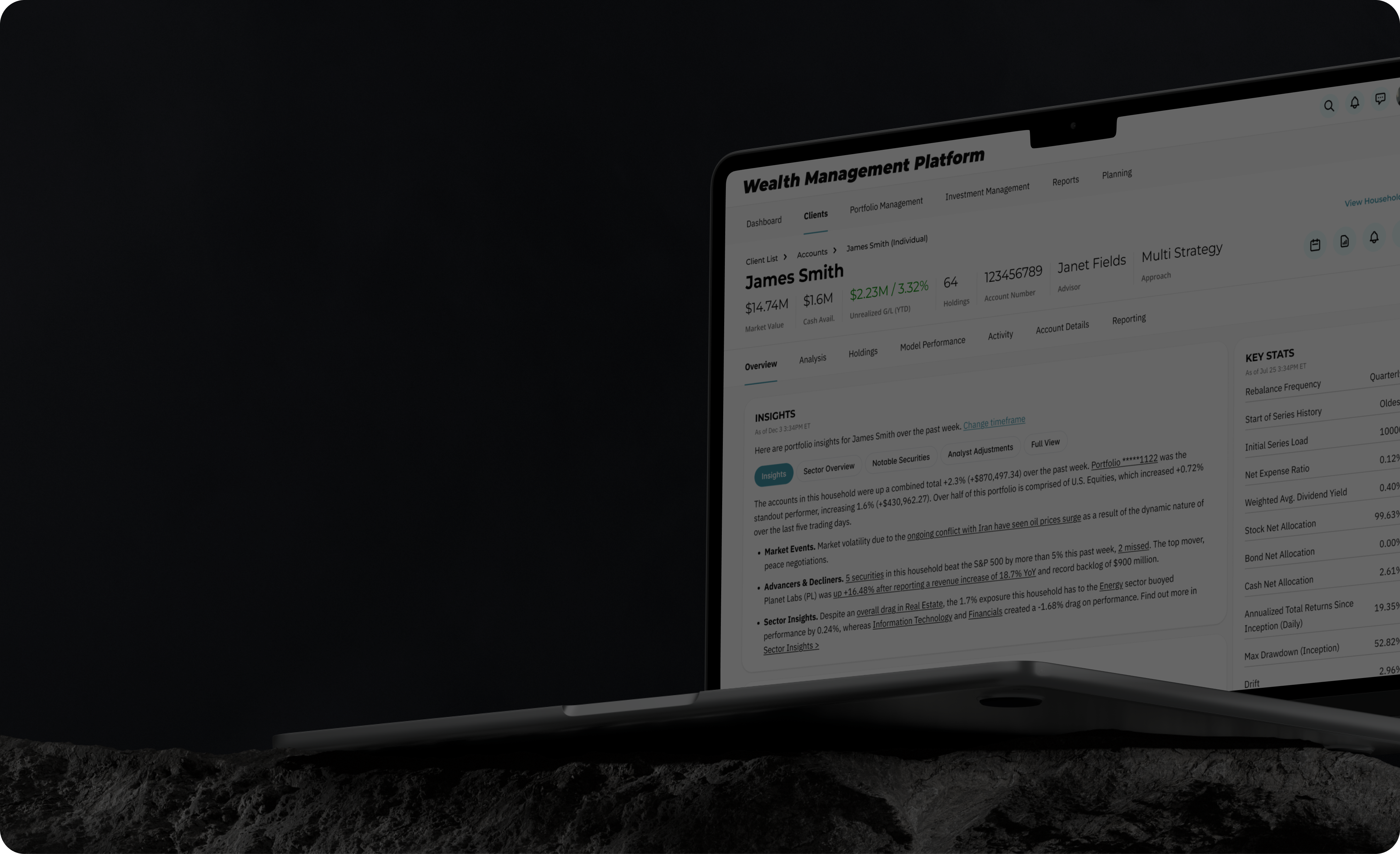






We deliver fiduciary grade AI within your investment platform
Get instant, clear insights powered by real-time data with advanced AI that's purpose built for finance.
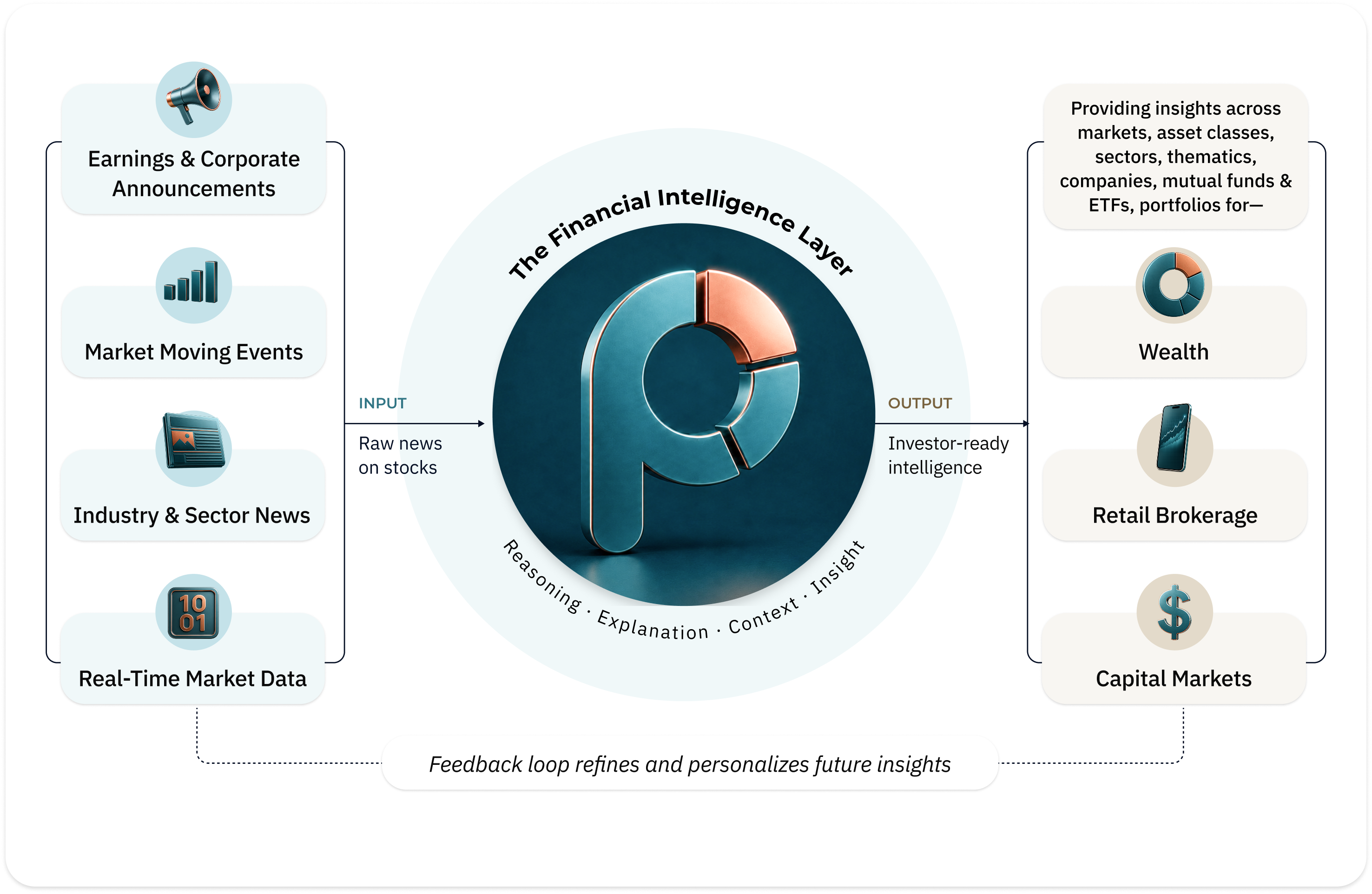
Pebble helps wealth and investment firms embed AI-powered market and portfolio intelligence directly into their platforms, enhancing advisor, client, and analyst workflows. The result is stronger engagement, greater productivity, and accelerated AUM growth.
Who we serve
Pebble powers leading financial platforms and helps firms embed fiduciary-grade AI experiences that modernize investment workflows, differentiate their platforms and meet rapidly evolving client expectations.
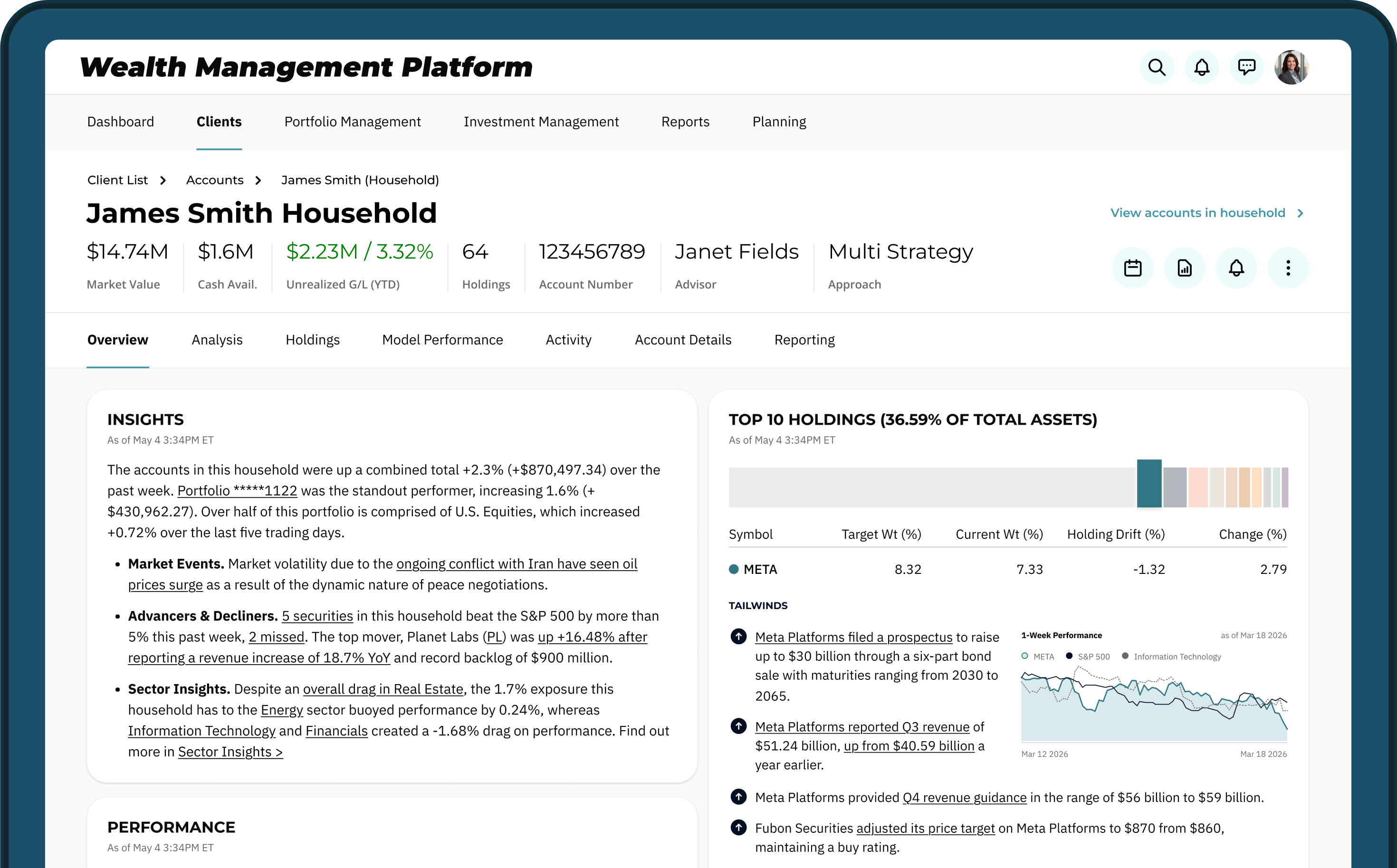
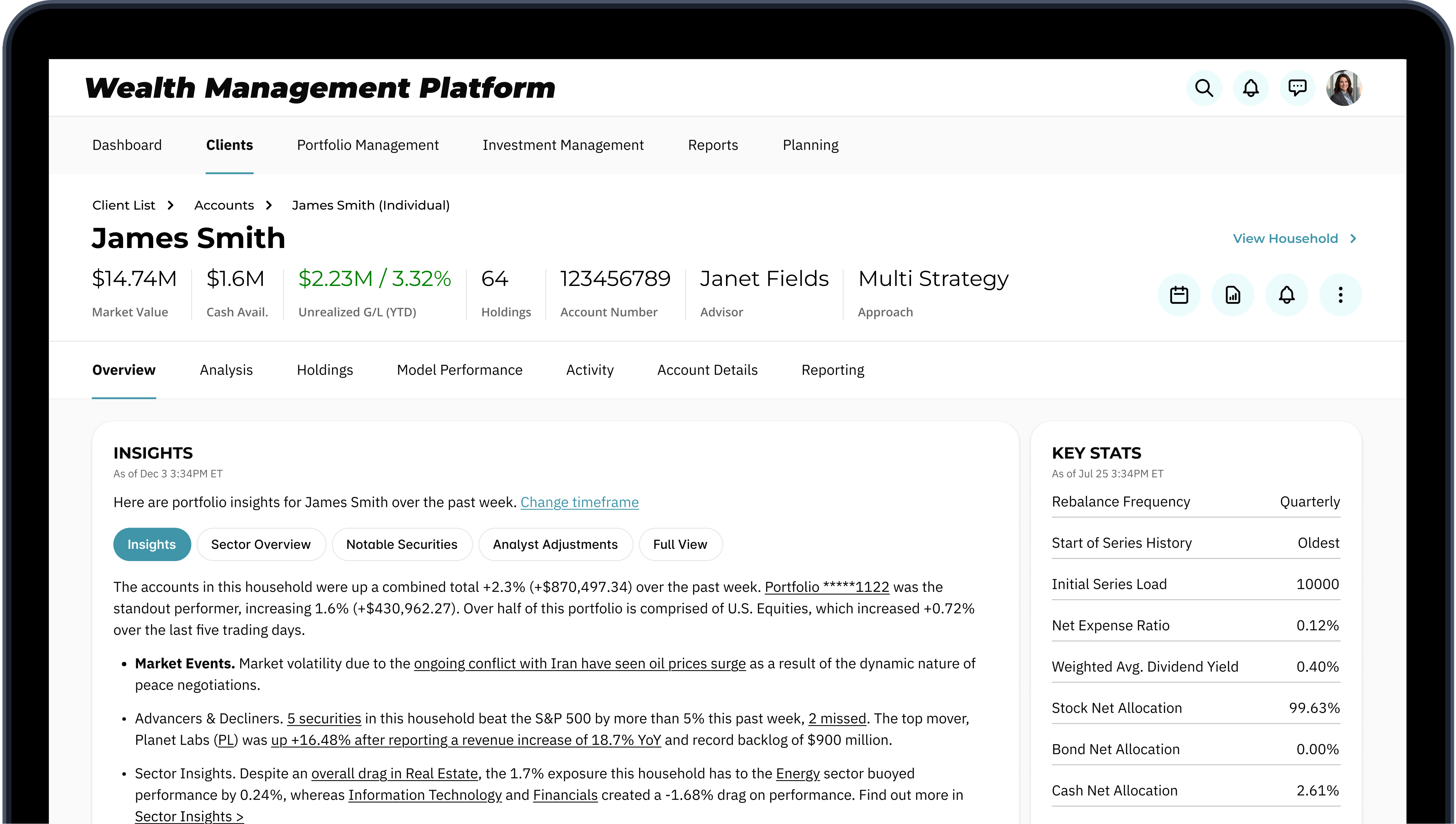
Wealth Management
Increase client service quality and advisor productivity without increasing headcount through AI-powered portfolio and market intelligence.
- Automated client review preparation
- Personalized portfolio commentary
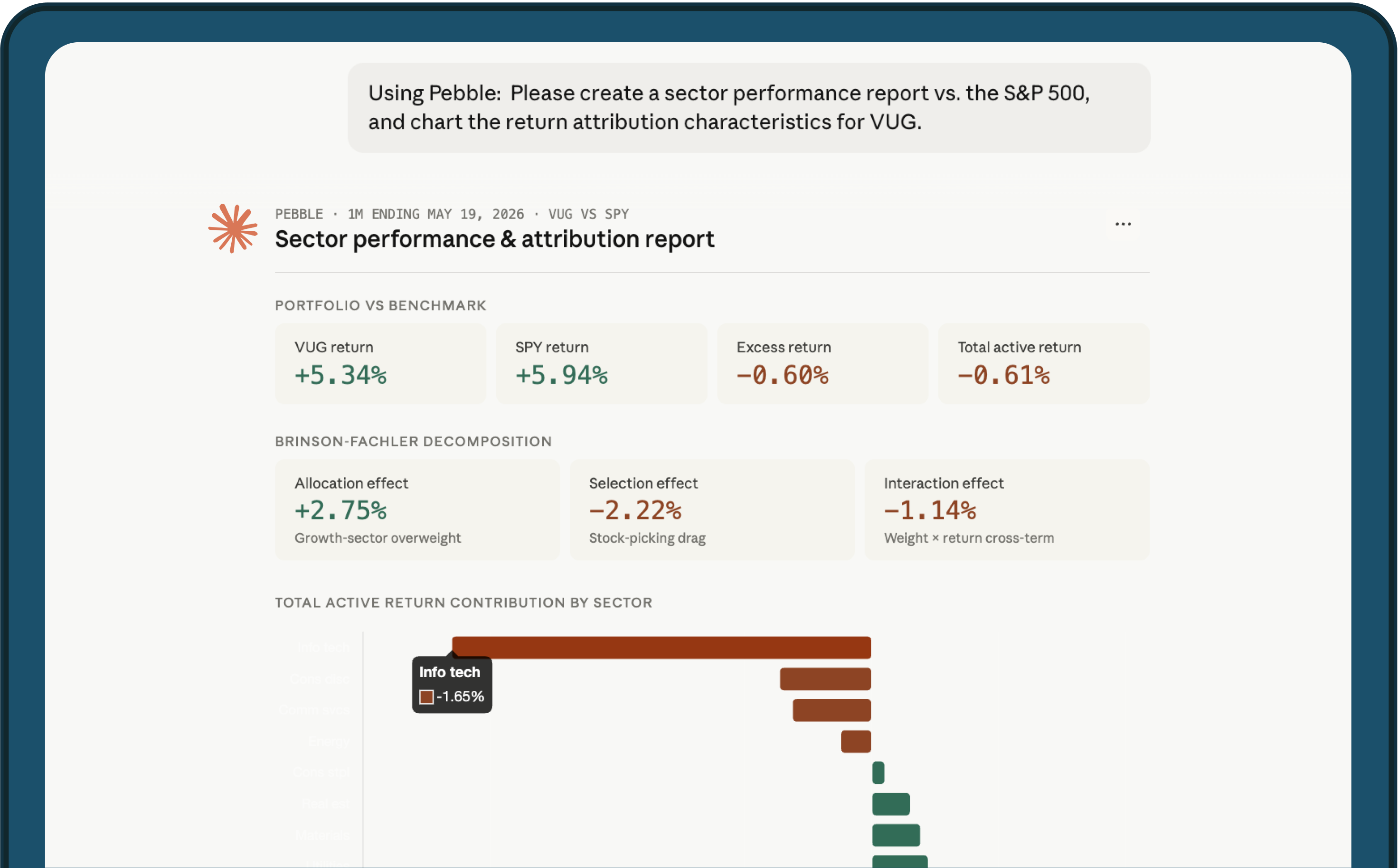
- Risk, exposure & performance explainability
- Advisor copilots for client engagement
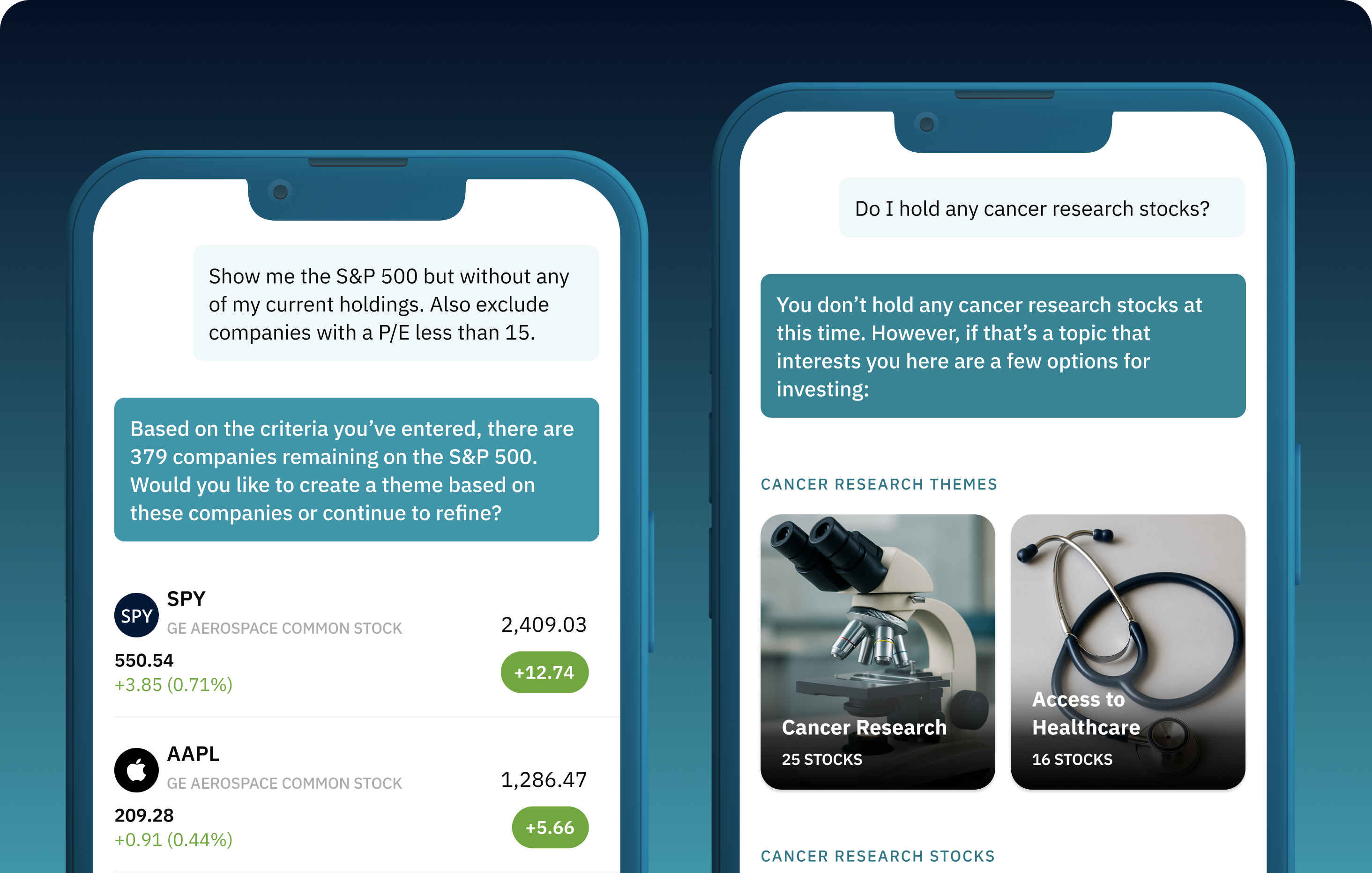
Retail Brokerage
Drive investor engagement with AI-powered market and portfolio intelligence that increases activity, retention and asset growth.
- Personalized investor insights & explainability
- AI-generated alerts, commentary & watchlist intelligence
- Copilots for education, discovery & trading
- Portfolio reviews at scale
Asset Management
Strengthen investor communication and accelerate distribution with scalable AI-generated portfolio intelligence and fund commentary.
- Automated fund and portfolio commentary
- PM and sales intelligence copilots
- Risk and exposure explainability
- Investor reporting automation
Information Providers
Unlock new AI-native distribution channels by transforming financial content into interactive, explainable and conversational investment intelligence.
- AI-native news & research experiences
- Conversational delivery across wealth platforms
- Embedded market and portfolio explainability
- Personalized insight and commentary generation




The hard part isn't building AI. It's scaling it.
Financial institutions are discovering that AI prototypes built on generalized LLMs become costly, unpredictable and difficult to govern at scale. Pebble was purpose-built for the operational realities of enterprise AI in regulated finance.

AI economics at scale
What works in a prototype often breaks under enterprise usage. With Pebble you can:
- Eliminate runaway token & interference costs
- Deliver sub-second insights across millions of portfolios
- Build for predictable enterprise-scale operations

Built for compliance from day one
Regulated firms need more than powerful models. Luckily, Pebble has:
- Human review & approval workflows built in
- Explainable outputs designed for oversight teams
- The structure for evolving regulatory expectations

From AI strategy to production
Most internal AI initiatives stall long before enterprise deployment. Pebble helps you:
- Avoid multi-quarter infrastructure rebuilds
- Deploy enterprise-ready capabilities immediately
- Accelerate time-to-market without expanding engineering teams





We have the first regulator-blessed AI built for finance
Our team has over 100 years of combined experience working with complex, critical and sensitive financial data. We're working to set the industry standard for compliant Financial AI, delivering commentary built to align with regulatory guidelines for accuracy, bias and governance.

This means your data is safeguarded under rigorous, independently-verified security controls that meet industry-leading standards.
 Over 99% accuracy rate
 Accuracy checks & constant evals
 Human in the loop reviews
 Zero client data retention
 Secure enterprise cloud
 On-premises option available
Discover the Pebble difference.
Find out how we can work together to help your people make smarter, faster investment decisions with financial AI.
Check out the latest resources from Pebble
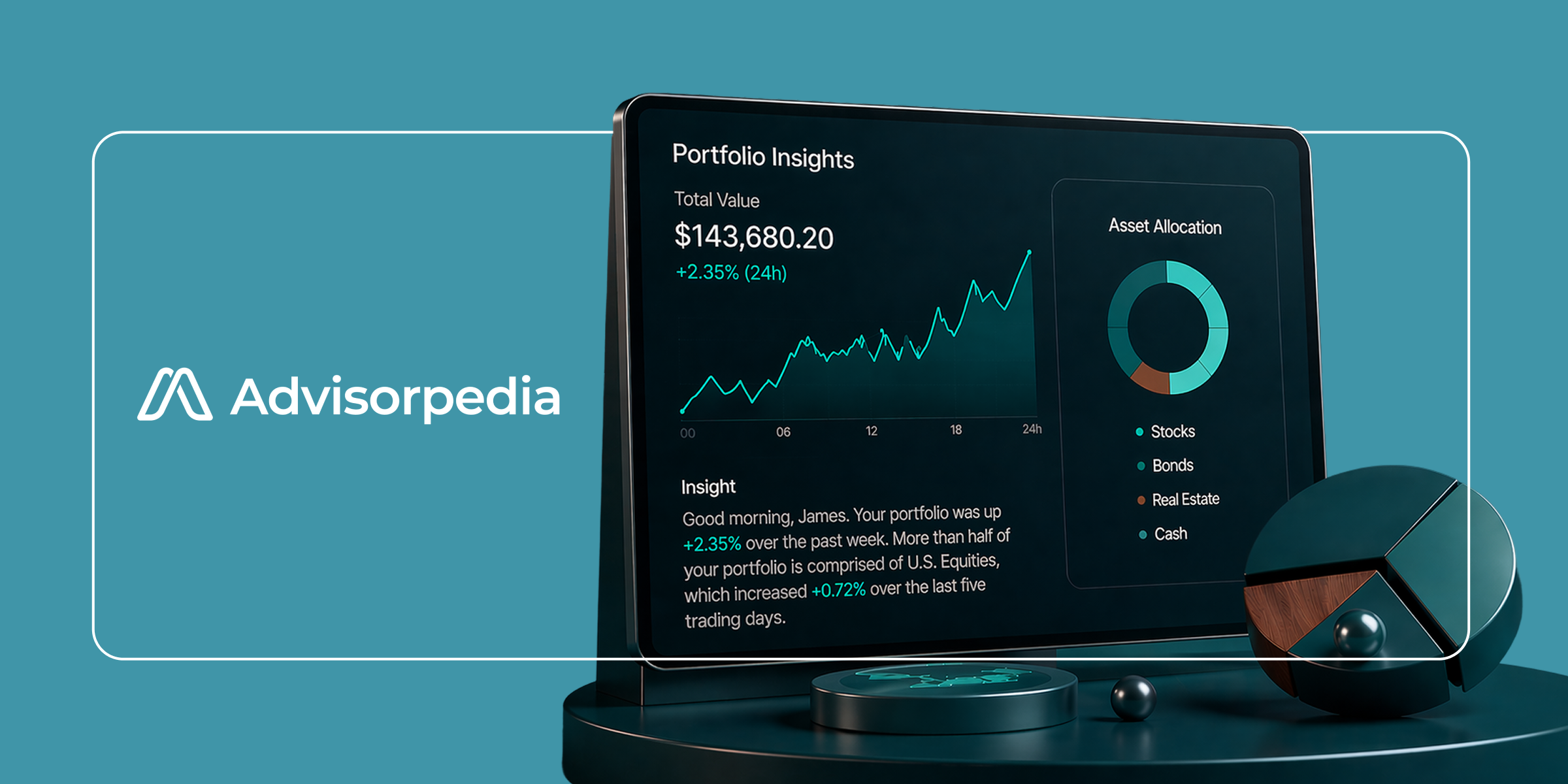
Why Pebble Finance Could Change How Advisors Explain Portfolios
At Future Proof Citywide in Miami, Justin Whitehead framed Pebble around a simple idea: investing tools should make markets easier to understand, not harder to navigate.

For Now, AI Is Making Financial Advisors More Productive. What Comes Next Could Be More Disruptive
Thousands of financial advisors at the Future Proof conference in Miami last week got a glimpse of how AI is changing their industry. Here’s what they saw.

How AI Will Change Wealth Management in 2026 and Beyond
Our very own Justin Whitehead sat down with down with InvestmentNews anchor Gregg Greenberg to explain how AI will change the wealth management industry in 2026 and beyond.
Common questions
Everything you need to know about Pebble. Can't find your answer? Reach out to us directly.
What is Pebble?
Pebble is an AI intelligence layer for wealth management, retail brokerage and asset management firms. Pebble transforms market events, portfolio activity and financial content into personalized investor insights, commentary and explainability experiences.
What problems does Pebble solve?
Pebble helps financial institutions scale investor communication, increase engagement and automate manual analysis workflows. Common use cases include portfolio commentary generation, market and portfolio explainability, advisor and investor copilots, investor alerts and notifications, fund commentary automation, and AI-powered research and discovery experiences.
Who uses Pebble?
Pebble is built for retail brokerages, wealth management firms, RIAs, asset managers, banks, financial data providers, and financial news and research platforms.
Does Pebble integrate with existing financial platforms?
Yes. Pebble is designed to integrate with existing wealth management, brokerage and asset management infrastructure through APIs and modular AI services.
Can Pebble use proprietary financial content?
Yes. Pebble can ingest and operationalize proprietary research, news, market data, investment commentary, analyst content and portfolio intelligence — allowing firms to create differentiated AI experiences powered by their own content and expertise.